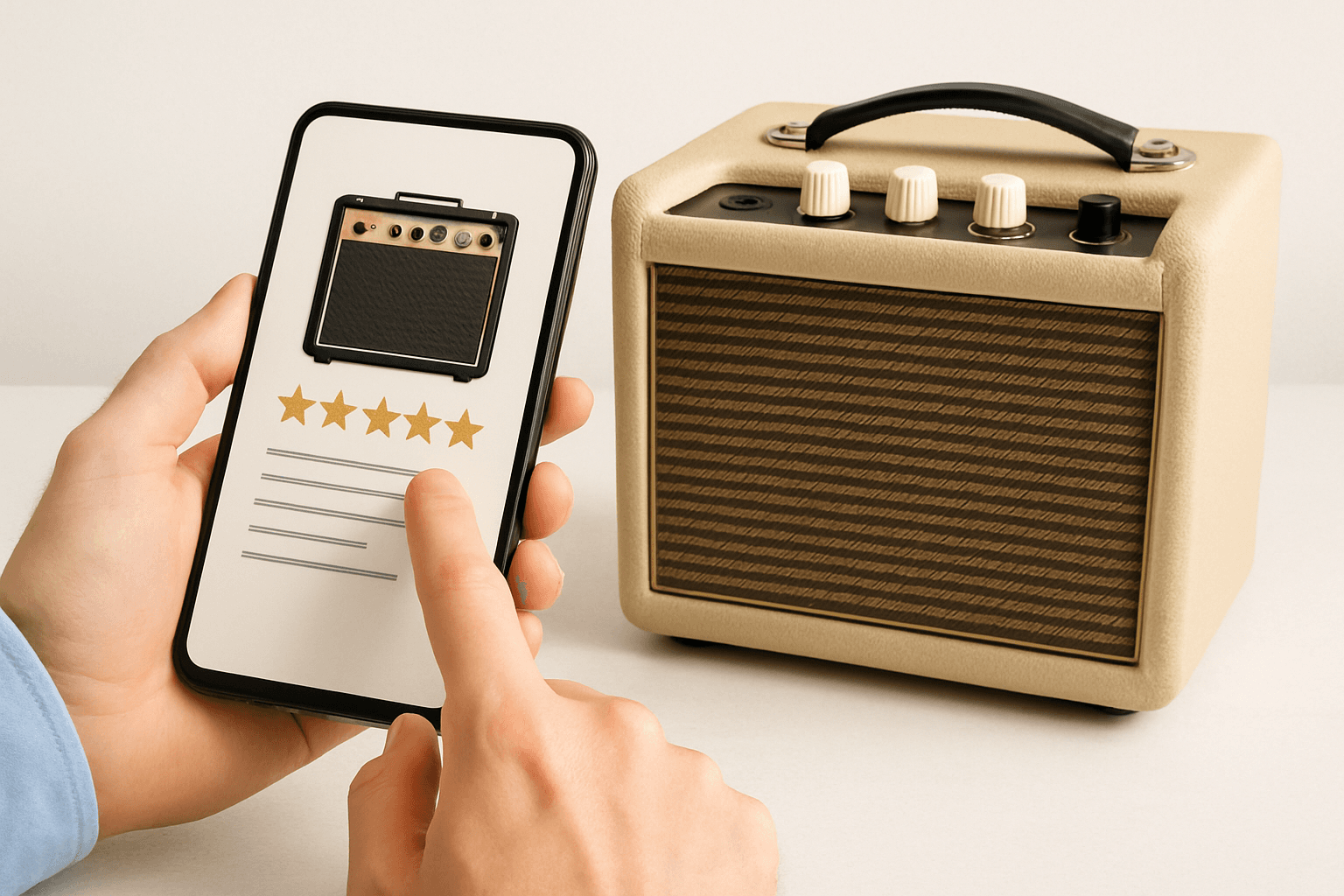
Amp Reviews You Can Actually Trust: Guitar, Tube & Audio Gear Buying Guide
Cut through biased amp reviews with a practical buying guide covering tube, solid-state, and modeling amps, pricing tiers, and trusted review sources.
Not all amp reviews are created equal. Sponsored posts, recycled spec sheets, and vague tone descriptions send buyers in the wrong direction. This guide covers every major amp type, the features that actually matter, realistic price tiers, and how to spot a trustworthy review before committing hundreds of dollars to a purchase.
Why Amp Reviews Matter Before You Spend a Dollar
A guitarist in Nashville spent $650 on a combo amp after skimming three sponsored blog posts. Six weeks later, it sat in a corner, too loud for his apartment and too thin for his genre. One solid, hands-on review would have saved him the return shipping fee and two months of frustration.
That story is not unusual. Average guitar amp return rates at major retailers run around 12 to 18 percent, which reflects a research gap more than a product quality problem. A mid-range amp purchase commits $300 to $1,000 of a musician's gear budget in a single transaction. OutportReviews launched its audio equipment category in September specifically to address that gap, giving buyers structured guidance before they commit. A dedicated resource like ampreviews.us shows what thorough, category-specific coverage looks like when it is built around gear rather than general consumer products.
How a bad amp purchase can cost you more than money
Returning an amplifier is rarely as simple as dropping a box at a shipping counter. Restocking fees often run 15 percent of the purchase price, and shipping costs for amplifiers average $40 to $80 each way. Beyond the direct financial hit, there is the wasted setup time spent configuring an amp that ultimately does not fit your space or style. For home studio users, a tone mismatch is a hidden productivity cost: hours of session time lost chasing a sound the audio gear simply cannot deliver.
What separates a genuinely useful amp review from filler content?
The clearest sign of a filler review is the absence of actual playing time. If a reviewer cannot describe how a specific speaker responded at different volumes, or does not mention wattage testing results, the piece was likely written from a spec sheet. Vague EQ observations like "warm and punchy" with no reference point are another signal. Review platform quality matters regardless of category; the same principles that apply to evaluating business reviews apply here, as explored in this comparison of Trustpilot vs Google Reviews. Rigorous amp reviews name exact models, production runs, and testing conditions rather than recycling manufacturer copy.
Why OutportReviews approaches audio equipment reviews differently
OutportReviews functions as an aggregator that benchmarks user feedback against editorial findings rather than treating each as a separate signal. When you post a finding or share a user experience on the platform, it gets weighed against a broader dataset. That model lets readers continue building a clearer picture over time rather than relying on a single source. The editorial policy is transparent: no undisclosed sponsorships, no affiliate relationships that are not clearly labeled. For more on this, see related industry context.
Types of Amps Explained: What Are the Key Differences?
Does a 15-watt tube amp really sound better than a 100-watt solid-state head at bedroom volumes? Or is that just audiophile mythology repeated across gear forums? Understanding the core amp categories before you read a single review stops you from comparing apples to completely different fruit.
For a broader view of amplifier categories in context, ampsreviews.com covers niche amp types alongside mainstream options worth comparing. The table below maps out the key categories at a glance.
| Amp Type | Typical Weight | Price Range | Best Use Case | Sound Character |
|---|---|---|---|---|
| Tube | 35–65 lbs | $400–$3,000+ | Stage, studio | Warm, harmonic-rich |
| Solid-State | 15–30 lbs | $100–$900 | Practice, rehearsal | Clean, reliable |
| Digital Modeling | 10–25 lbs | $150–$800 | Home studio, travel | Versatile, preset-driven |
| Class A | 30–55 lbs | $800–$3,000+ | Studio, audiophile listening | Full, even harmonics |
| Class AB | 20–50 lbs | $300–$2,000 | General gigging | Efficient, punchy |
Tube amps vs. solid-state amps: which delivers better tone?
Tube amplifiers produce even-order harmonic distortion that most players describe as musical and responsive. Solid-state designs clip more harshly under stress, which suits clean headroom applications but feels less forgiving when pushed. Neither is universally superior. The practical question is use case: a tube amplifier running at 10 watts in a small venue will behave very differently than a 100-watt solid-state head in the same room. Maintenance is also a factor. A retube service typically costs $30 to $100 depending on tube count and labor, and should be factored into the total cost of ownership when evaluating any amplifier purchase.
Combo amps vs. amp heads and cabinets: what should you buy?
Combo amps package the amplifier and speaker into one unit, typically weighing 20 to 45 lbs. That portability comes at the cost of flexibility. Head-plus-cab rigs let you swap speakers or power sections independently, which matters for players whose sound requirements shift between contexts. For a rehearsal space or gym session where setup speed is a priority, a combo is nearly always the more practical choice. Head and cabinet rigs reward players who want more control over their signal chain.
Class A, Class AB, and digital modeling amps compared
Class A amps run at roughly 25 percent efficiency, which means they run hotter and draw more current than other designs. That inefficiency produces a continuous, even harmonic response that appeals to audiophile listeners and studio engineers seeking a particular warmth. Expect higher electricity draw and more heat management.
Class AB amps operate at 65 to 75 percent efficiency, making them the practical standard for most gigging rigs. They split operation between two output devices, reducing heat while preserving the dynamic response players want at volume.
Digital modeling amps store 50 to 200 presets depending on the model and are the preferred choice for home studio recordists who need silent recording via DI out. They skip the maintenance cycle entirely and offer consistent tone regardless of tube age.
What is the right amp type for your playing style or listening setup?
Four buyer profiles cover most purchasing decisions. The bedroom player needs low-wattage clean headroom and minimal noise floor; a 5 to 15 watt combo handles this well without overpowering a small room. The gigging musician needs reliable volume, road-worthy construction, and enough speaker output to fill a venue without a PA. The home studio recordist benefits most from a modeling amp or low-watt tube amp with a quality DI out, eliminating the need for microphone placement. The vinyl or hi-fi listener is shopping for a different kind of amplifier entirely, where speaker matching and low noise floor matter more than overdrive character. The right starting point differs for each persona, but the evaluation framework in any good review should speak directly to one of these four contexts. For more on this, see related industry context.
How to Read Amp Reviews Without Getting Misled
A BrightLocal study found that 62 percent of consumers have read a fake or misleading online review in the past year. Audio visual and gear categories are no exception. Amp reviews are riddled with undisclosed sponsorships, recycled spec sheets, and forum posts from brand accounts. Knowing what to filter out is a skill worth building before your next purchase.
5 Red Flags in Any Online Amp Review:
- Sponsored language without FTC disclosure
- No wattage test data or volume comparison
- No mention of speaker type or size
- No date or model revision noted
- No negative observations whatsoever
Red flags in online amp reviews you should never ignore
The checklist above is a practical filter for the first 90 seconds of reading any review. Recency matters more than most buyers realize: a review post without a publication date or firmware version note is unreliable for current production models, which can change significantly between runs. FTC disclosure rules have required material connection disclosures since 2009, yet many gear sites still bury or omit affiliate language. When tips about tone come with no evidence of actual playing time, treat the entire post as a marketing document rather than editorial coverage.
Are forum-based amp reviews more trustworthy than editorial sites?
Forums offer raw user experience data that editorial sites rarely match for depth. A thread with 50 or more replies tends to surface a wider range of outcomes, including failures, production run changes, and long-term reliability patterns that a single editorial review cannot capture. However, forums suffer from survivorship bias: users who had no problems rarely return to post, while those who experienced failures often do. Brand sockpuppeting is also a real issue, particularly on less-moderated boards. The AmpReviews forum applies community standards that help filter low-quality posts. For structured search queries, use forum content as a corroboration layer rather than a primary source. A combination of editorial and community data, weighted by forum software quality and moderation standards, produces better decisions than either alone.
How to use user reviews alongside professional feedback for better decisions
- Read two to three professional reviews for specification accuracy and testing methodology. These provide a reliable baseline for wattage claims, speaker response data, and build quality assessment.
- Cross-reference ten or more user reviews for real-world reliability patterns. Look for recurring complaints about specific components; a consistent account of the same failure mode across multiple users signals a structural issue.
- Search for complaints tied to the specific production run or model year, then continue refining your shortlist based on those findings. Understanding how reviews are solicited helps you assess their credibility, as covered in this guide on how to ask customers for reviews.
Key Amp Features to Evaluate Before You Buy
Wattage is the most misunderstood number in any amp review, and it causes more bad purchases than any other spec. Knowing what four features actually determine a real-world buying decision will cut through the noise faster than reading 20 full-length reviews ever could.
The team behind AmpReviews has built its editorial framework around exactly these gear evaluation criteria, which makes their feature breakdowns a useful cross-reference when you are narrowing a shortlist.
Wattage, headroom, and why they matter for guitar players
The decibel doubling rule explains why wattage numbers mislead buyers: every 3 dB of perceived volume requires double the amplifier power. A jump from 50 to 100 watts produces a barely perceptible volume increase in practice. What wattage actually controls is headroom, which is the amount of clean signal an amplifier can handle before it begins to distort. Most home players need no more than 20 watts, and a 5-watt tube amp produces roughly half the perceived volume of a 50-watt solid-state amp, not one-tenth. Understanding this ratio changes how you evaluate any amplifier sound claim in a review.
Tone controls, EQ options, and built-in effects worth prioritizing
3-band EQ, Bass, Mid, and Treble comprise the minimum standard for useful tonal shaping; budget amps under $200 sometimes reduce this to a single tone knob, which is a significant limitation.
Presence control adjusts upper-midrange frequencies independently of the standard EQ stack; a useful indicator for whether a manufacturer prioritized real-world tone shaping.
Built-in reverb adds room and spring reverb circuits that offer usable ambience without an external pedal; quality varies significantly between price tiers.
Channel switching separates clean and drive channels via footswitch; mid-cut EQ is often missing on budget designs, which limits genre flexibility.
Speaker size and cabinet construction: does it affect real-world performance?
Speaker cone diameter directly affects low-frequency response below 200 Hz. A 12-inch speaker moves more air and produces more defined bass than an 8-inch or 10-inch cone in the same cabinet. For the vinyl and hi-fi listener, speaker matching is the single most important variable in the entire signal chain. Cabinet construction matters equally: closed-back designs are typically 3 to 6 dB louder at distance than open-back equivalents because they project sound in a tighter pattern rather than dispersing it behind the cab. Open-back cabinets produce a more diffuse, room-filling character that many players prefer for studio recording but find unpredictable on stage.
Connectivity features: speaker outputs, effects loops, and recording DI outs
Impedance-matched speaker outputs like 4Ω, 8Ω, and 16Ω must be matched carefully; mismatched impedance can damage output transformers, so always confirm the setup matches your cabinet rating before connecting.
Effects loops come in parallel or series configurations; a parallel loop blends wet and dry signal, while a series loop routes the full signal through the effect. Only about 40 percent of entry-level amps include one, which limits tone chain flexibility.
DI out with cab simulation lets you share a direct signal to a recording interface without a microphone; this saves a home studio user $150 to $400 in additional equipment costs on average.
Amp Pricing Breakdown: What Should You Expect to Pay?
In the 1960s, a Fender Deluxe Reverb sold for around $300, which adjusts to roughly $2,900 in 2024 dollars. Today, you can buy a highly capable modeling amp for $199. The price-to-performance ratio of portable audio and amplifier gear has shifted dramatically, but knowing which tier actually fits your needs still requires careful benchmarking.
| Budget Tier | Price Range | Representative Models | Best For | Key Trade-off |
|---|---|---|---|---|
| Budget | Under $300 | Boss Katana, Fender Frontman, Blackstar Fly | Beginners, practice | Limited headroom, fewer features |
| Mid-Range | $300–$1,000 | Fender Blues Junior, Vox AC15, Marshall DSL20CR | Most gigging players | Tube maintenance costs |
| High-End/Boutique | Above $1,000 | Matchless, Dr. Z, vintage Fender | Studio, serious players | High upfront cost |
Budget amps under $300: do affordable options hold up?
Modeling technology has improved meaningfully since 2018, and the Boss Katana at around $199 street price is the clearest evidence. It offers multiple amp voicings, a usable effects section, and solid-state reliability that means fewer service costs over time. The Fender Frontman series serves beginner players well for basic practice. The user experience at this tier is functional rather than inspiring, and the time most players spend at this level is a transitional period rather than a permanent home.
Mid-range amps from $300 to $1,000: where the real value lives
This tier is where most gigging guitarists land, and for good reason. The Fender Blues Junior at roughly $550 delivers a genuine tube sound in a portable format. The Marshall DSL20CR at around $700 covers clean and driven tones with real versatility, while the Vox AC15 at approximately $650 offers the chime and compression that audiophile players associate with British amplifier character. Tube amps in this range typically include effects loops and quality Celestion speakers, which extend the useful life of the investment. For most players, this tier represents the best balance of performance and practicality.
High-end and boutique tube amps above $1,000: are they worth it?
A quality tube amplifier built by a boutique manufacturer is a long-term investment rather than a consumer purchase. Hand-wired point-to-point construction, used by builders like Matchless and Dr. Z, can support a 20 to 30 year lifespan with proper maintenance. That changes the cost-per-year math significantly. Whether premium pricing is justified depends on how seriously you evaluate value in other categories; the analysis of Temu Reviews offers a useful contrast on how price and perceived quality relate in consumer markets.
Where to Find the Most Reliable Amp Reviews Online
Finding a trustworthy amp review online is a bit like using Yelp to pick a surgeon: the volume of opinions does not substitute for the quality of the methodology behind them. Knowing which sources apply consistent testing standards, disclose conflicts, and update coverage as models evolve saves you hours of cross-referencing.
Sweetwater's Gear Advisor team tests equipment in-house with a staff of 40 or more musicians. Reverb.com user listings include over 10 million gear items with attached buyer reviews. Major editorial sites like Premier Guitar publish three to five amp reviews per month. OutportReviews aggregates across sources to provide benchmarked feedback rather than isolated opinions.
Which amp review sites consistently deliver honest, hands-on testing?
Premier Guitar offers musician-written editorial content with detailed signal chain notes; it is strong on tube amp coverage and biased toward working players.
Sweetwater is a retailer with in-house context that means affiliate exposure, but gear descriptions are rigorous and staff reviews include in-house testing; it is useful for search-based spec comparison.
Guitar World is accessible and volume-heavy; it covers more models than most editorial sites but with variable review depth.
TalkBass and The Gear Page are community forums where audio discussions go deep; no uniform affiliate disclosure standard exists across contributors, so cross-check user histories before weighting a recommendation.
How to use amp review communities and forums effectively
- Filter by post date before reading anything. Threads older than three years are unreliable for current production models, which can change components, software, or circuit design between runs.
- Cross-check username post history for brand affiliation signals. Accounts created shortly before posting enthusiastic reviews and active only in threads for one brand are a credibility concern. Most forums require account creation and have explicit privacy policy requirements before posting, which creates some accountability; check what email verification and privacy standards the forum enforces.
- Look for threads with 20 or more replies containing both negative and positive experiences. A thread with exclusively positive posts is a signal worth investigating before you trust it.
Why OutportReviews aggregates audio gear feedback you can benchmark against
The OutportReviews aggregation model pulls together user reviews, editorial coverage, and community feedback into a single benchmarkable source. Rather than asking you to post a review on one platform and search another for context, the model lets you share findings across channels and continue building a more complete picture. Editorial policy at OutportReviews emphasizes no undisclosed sponsorships and consistent disclosure of any material relationships, which reflects the same policy transparency that serious amp buyers should demand from any source they rely on. You can continue reading more gear coverage on the OutportReviews blog as new content is added across audio and equipment categories.
Key Takeaways
- A bad amp purchase costs more than the return: restocking fees of 15 percent plus $40 to $80 in shipping make research a direct financial tool.
- Match amp type to use case before comparing prices; tube, solid-state, modeling, Class A, and Class AB designs are optimized for different contexts.
- Use a 5-point red-flag checklist when reading any review: no date, no wattage data, no speaker reference, no negatives, and no disclosure are all warning signs.
- The mid-range tier of $300 to $1,000 offers the best value for most players; boutique amps above $1,000 are long-term investments with 20 to 30 year lifespans when maintained.
- Cross-reference two to three editorial reviews with ten or more user reviews from dated forum threads for the most reliable buying signal.
FAQ
What makes a tube amp sound different from a solid-state amp?
Tube amps produce even-order harmonic distortion when pushed, which most players perceive as warm and musical. Solid-state designs clip more abruptly and are often described as harsher under heavy load. The practical difference depends on volume level and playing style. For clean tones at low volumes, a solid-state amp can be indistinguishable. For overdrive and dynamic response, tube designs tend to feel more responsive to picking intensity.
How much should I spend on my first amp?
For most beginners, a budget of $150 to $300 covers a reliable practice amp with enough tonal flexibility to grow with. The Boss Katana series offers strong value at this price point. Once your playing style is defined and you know your genre requirements, moving to the $300 to $700 range provides a meaningful performance upgrade. Avoid committing to a high-end tube amplifier before you know what sound you are actually chasing.
Are online amp reviews reliable enough to replace trying an amp in person?
Online reviews are most reliable when you use them as a filtering layer rather than a final decision tool. Read professional reviews for spec accuracy, use forum threads for long-term reliability data, and check production run dates. If an in-person trial is possible, it remains the most informative step. When in-store access is limited, combining three or more sources with consistent findings gives you a reasonable basis for a confident purchase.
What is the best amp for home studio recording?
A low-wattage tube amp (5 to 15 watts) with a quality DI output, or a digital modeling amp with built-in cab simulation, suits most home studio setups. The DI route eliminates microphone placement variables and reduces noise floor. Modeling amps from Line 6, Boss, and Fender offer flexible fidelity audio options at accessible price points, with direct recording outputs that connect cleanly to any standard interface.
How do I spot a fake or sponsored amp review?
Look for these indicators: no publication date or model version noted, no mention of specific speaker response or wattage tests, exclusively positive observations with no trade-off discussion, affiliate links without disclosure language, and thin description of actual playing experience.
FTC rules require disclosure of material connections in any review context. If a post reads more like product copy than hands-on reporting, treat it as marketing.